
A Cross-Curricular History & Social Studies Enrichment Activity
Grades 2–12
Goal: Students examine clues from history, culture, technology, clothing, inventions, music, architecture, and everyday life to determine what era or historical period they belong to.
🎯 Skills
- Historical thinking
- Chronological reasoning
- Research
- Observation
- Vocabulary
- Evidence-based reasoning
- Connecting historical events to everyday life
🎮 How to Play
Give students a mystery clue card without telling them the era.
Students must:
1. 🔎 Read the clues.
2. 🧠 Make a prediction.
3. ✍️ Write down the evidence supporting their answer.
4. 🕰️ Guess the era.
5. ⭐ Earn bonus points for identifying the approximate years.
Scoring:
- 1 point — Correct era
- 1 point — Correct approximate time period
- 1 point — Correctly explains a clue
- 1 bonus point — Adds an interesting historical fact
🟢 GRADES 2–3
“What Time Am I From?”
Use 3–4 simple clues.
Mystery Card Example:
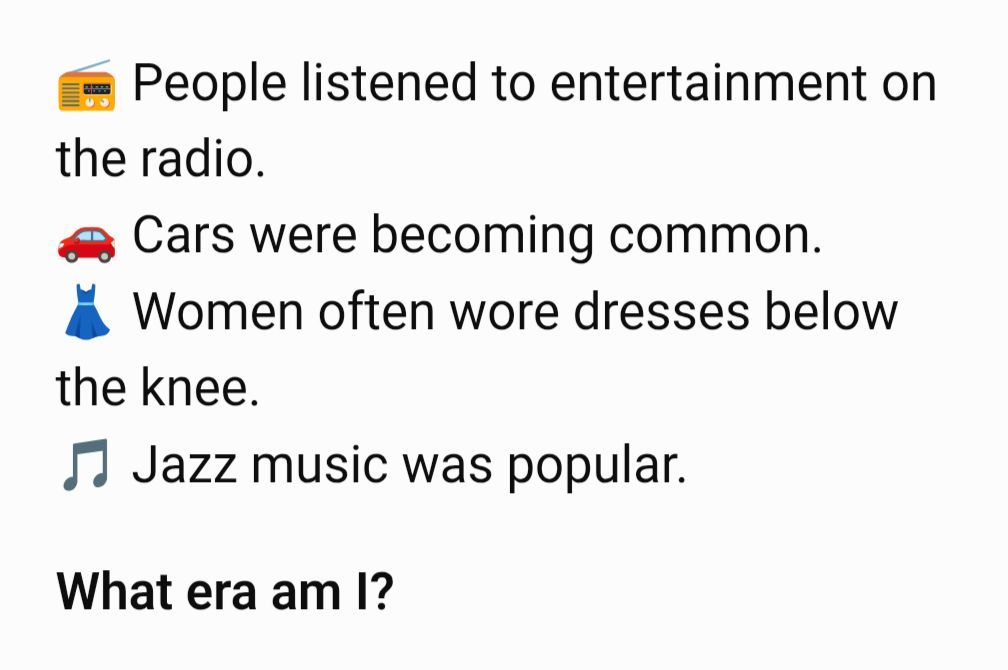
Answer: The 1920s
Student Challenge
Draw something from the era and complete:
“I think this is from the ______ because ______.”
🔵 GRADES 4–5
“Three Clues & a Time Machine”
Give students 5 clues.
Mystery Era:
- The Wright brothers made an important flight.
- Silent movies were popular.
- Automobiles were becoming more common.
- The Titanic sank.
- People used telegraphs to communicate.
Guess the Era:
Early 1900s / 1900–1919
Challenge
Students create their own 5-clue mystery card for a partner.
🟣 GRADES 6–8
“Evidence Detective”
Students receive clues that aren’t quite as obvious.
Mystery Card:
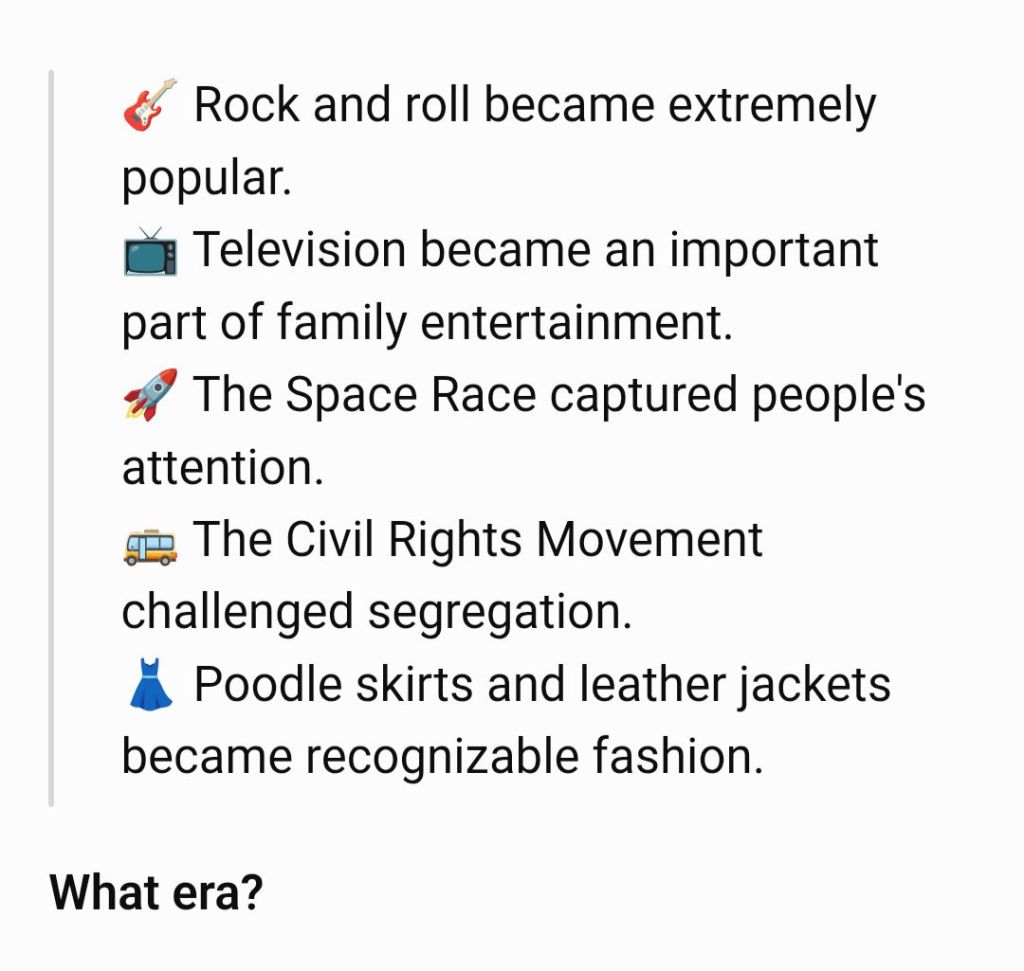
Answer: 1950s–1960s
Evidence Challenge
Students must identify:
Era: __________
Approximate years: __________
Strongest clue: __________
Why it proves my answer: __________
One thing I want to research: __________
🟠 GRADES 9–10
“Historical Forensics”
Give students mixed evidence rather than obvious clues.
For example:
Mystery Era #1
- Assembly-line production transformed manufacturing.
- Radio became a major source of mass communication.
- Women’s suffrage expanded in several countries.
- World War I dramatically changed international politics.
- Modern advertising and consumer culture expanded.
Possible Answer: 1910s–1920s
Higher-Level Challenge
Students must determine:
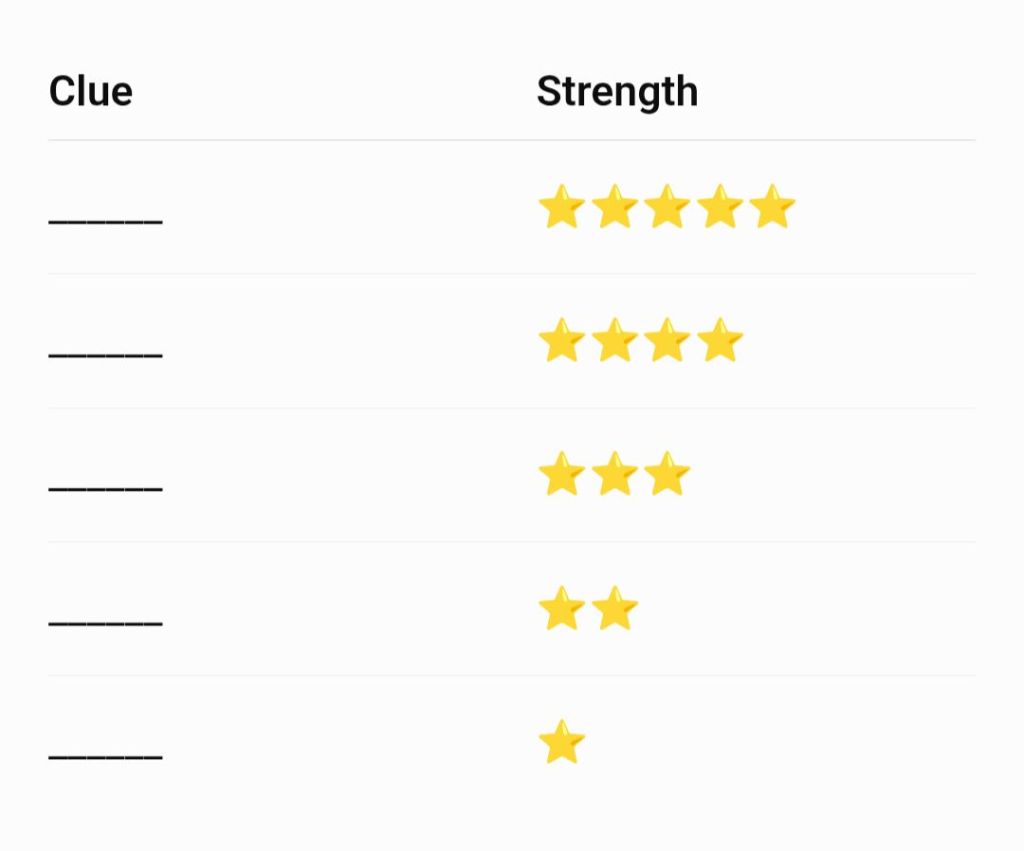
What evidence is most reliable for identifying this era?
Then rank their clues:
🔴 GRADES 11–12
“Can You Prove the Era?”
Now make the activity analytical rather than simply a guessing game.
Give students 8–10 pieces of evidence from a particular period.
Some clues should be obvious. Others should be misleading or span multiple eras.
Students must determine:
🕰️ Historical Era
________________________
📅 Approximate Date Range
________________________
🔎 Three Pieces of Evidence
- _____________________
- _____________________
- _____________________
🧠 Historical Reasoning
My conclusion is __________ because the evidence suggests __________.
⚖️ Counterargument
Someone might argue that these clues belong to __________ because __________. However, I believe _________ because __________.
This turns the game into a mini historical reasoning exercise.
🏆 “GUESS THE ERA” ERA BANK
You can pull mystery cards from any of these:
Era Approx. Time
🦕 Prehistoric Era Before c. 3000 BCE
🏺 Ancient Egypt c. 3100–30 BCE
🏛️ Ancient Greece c. 800–146 BCE
🦅 Ancient Rome c. 753 BCE–476 CE
🏰 Middle Ages c. 500–1500
🎨 Renaissance c. 1300–1600
⛵ Age of Exploration c. 1400s–1600s
⚔️ American Colonial Era c. 1600s–1776
🇺🇸 American Revolution 1775–1783
🏭 Industrial Revolution c. 1760–1840
🤠 American West c. 1860s–1890s
🚂 Victorian Era 1837–1901
🌎 World War I Era 1914–1918
🎷 Roaring Twenties 1920s
📉 Great Depression 1929–late 1930s
⚔️ World War II Era 1939–1945
🕺 1950s 1950–1959
✌️ 1960s 1960–1969
🪩 1970s 1970–1979
📼 1980s 1980–1989
💿 1990s 1990–1999
🌐 2000s 2000–2009
📱 2010s 2010–2019
🌟 BONUS ROUND: “TIME TRAVELER”
For any grade level, give students this prompt:
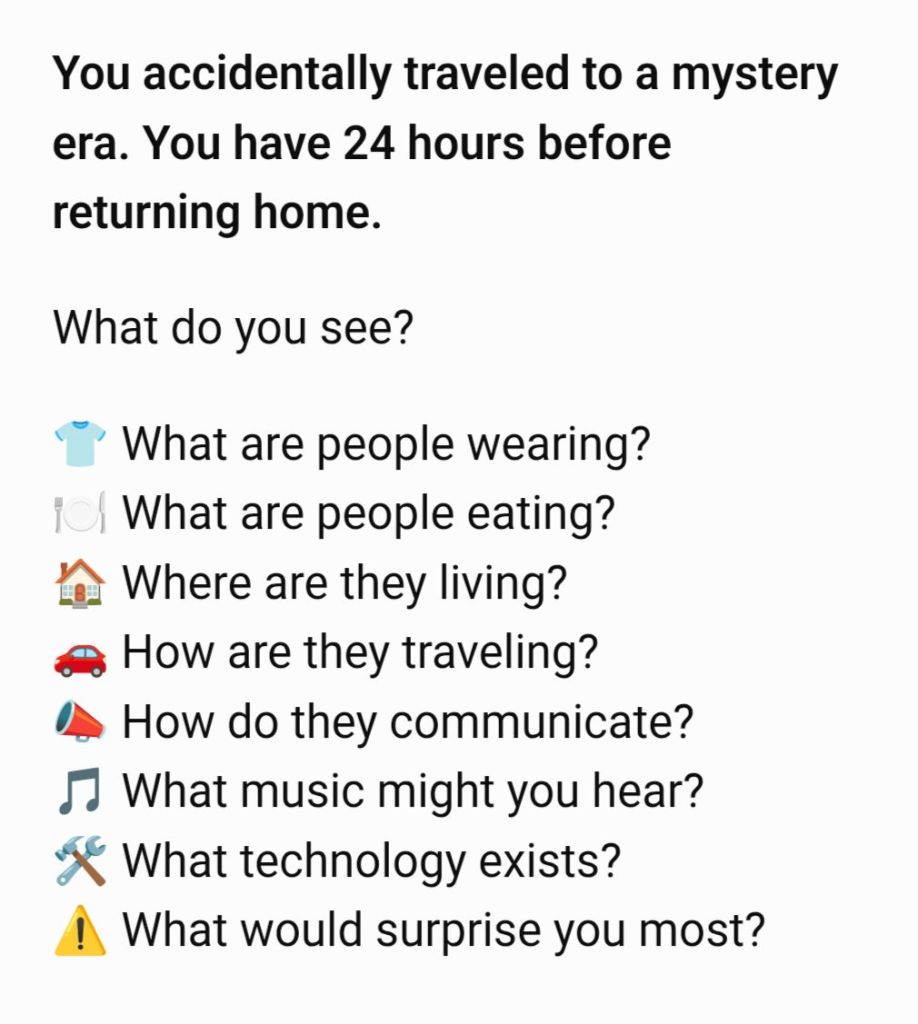
Grades 2–5: Draw and label their time-travel experience.
Grades 6–8: Write a diary entry.
Grades 9–10: Write a first-person historical account using evidence.
Grades 11–12: Write a historically grounded primary-source-style journal entry, separating documented facts from reasonable inference.
🏅 Optional Enrichment
Turn it into a family/team competition: one student reads the clues while everyone else races to identify the era and defend their answer. The older students can serve as “History Judges” and award points for the quality of the evidence, not merely the correct guess.
 Homeschool Aunt Chaos